
Vincent Parco Consulting LLC
Private Investigations
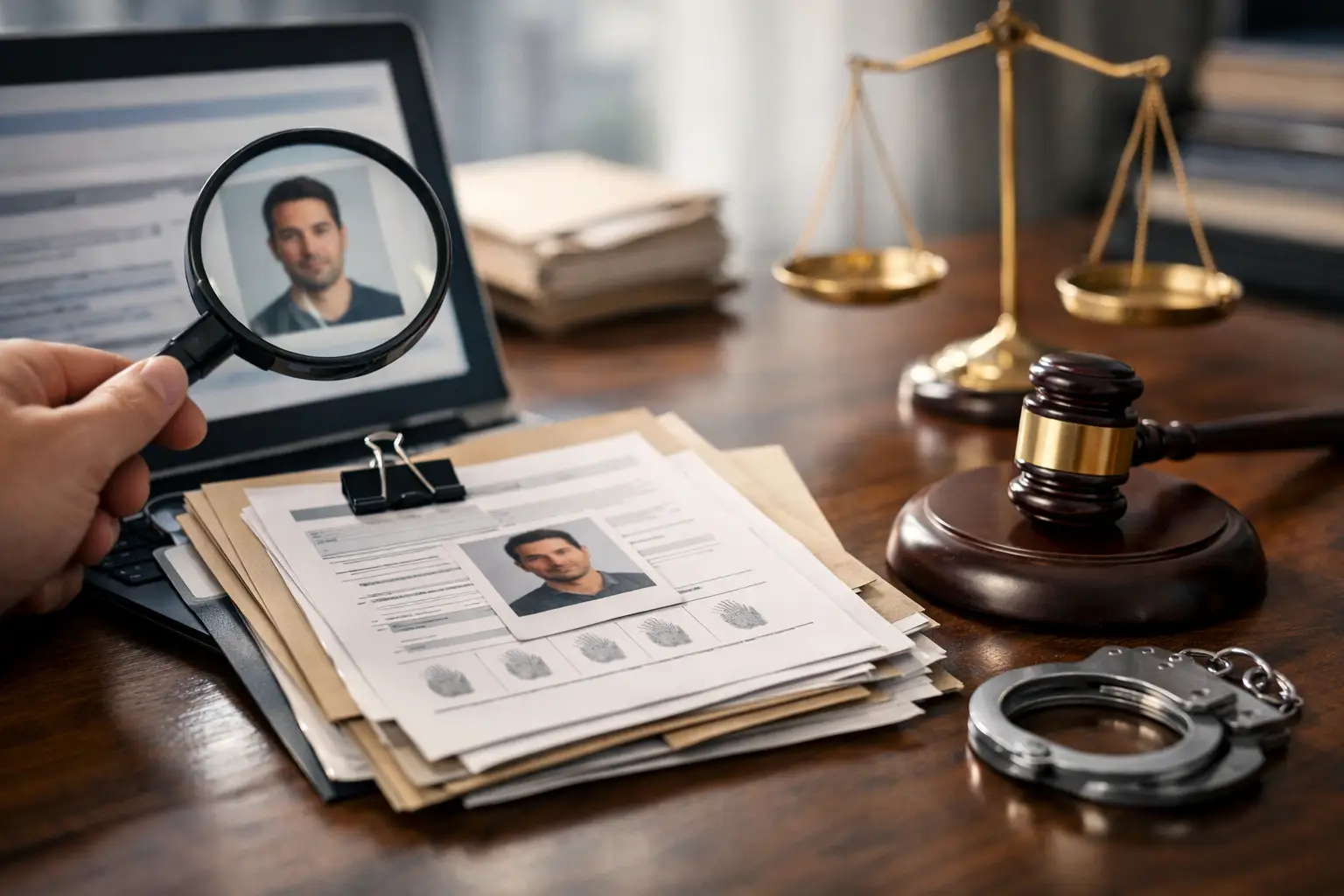
A background investigation can expose a hidden address, a false employment claim, an undisclosed business, or a witness with a reason to lie. But are background investigations admissible evidence? The straight answer is: sometimes. A court does not admit a report simply because a private investigator found it. The information must be relevant, legally obtained, reliable, and presented in a form the rules of evidence allow.
That distinction matters when child support is unpaid, assets appear to have disappeared, an insurance claim does not add up, or a business partner has concealed material facts. Good intelligence gives you direction. Properly developed evidence gives your attorney something to use in court.
A background investigation is a process, not one single piece of evidence. It may include public-record searches, corporate filings, property records, interviews, surveillance, social media review, database research, and document verification. Each item has to stand on its own.
A certified court record, for example, may be admitted if it is relevant and properly authenticated. An investigator’s testimony about what they personally observed may also be admissible. A report repeating what an unidentified database said, what a neighbor supposedly claimed, or what an internet search produced can run into a serious hearsay problem.
Judges generally look at several questions: Is the evidence relevant to a disputed issue? Was it gathered lawfully? Can the party offering it show that it is authentic? Is it hearsay, or does a recognized exception apply? Will its value outweigh unfair prejudice, confusion, or wasted time?
The answer can differ by state, court, and case type. A family-court judge handling child support may view financial records and documented employment activity very differently from a criminal court evaluating evidence against a defendant. No investigator can guarantee that a judge will admit every item. What a qualified investigator can do is build the case with courtroom reality in mind from the first day.
Clients often ask for a “background check” when what they really need is proof. Those are not the same thing.
A background report can identify leads: possible aliases, prior addresses, business connections, litigation history, vehicles, properties, or known associates. It may show an attorney where to subpoena records or whom to question under oath. That makes it valuable. But a report itself may be treated as a summary, not the final proof.
The stronger approach is to trace every significant allegation back to its source. If an investigation shows that a former spouse may be working off the books, the useful evidence is not just a database entry. It may include legally obtained surveillance, business registrations, observed work activity, public-facing advertising, photographs with accurate dates, and records obtained through formal legal process.
If a subject appears to own assets through a company or nominee, a screen capture alone will not carry the day. The case may require entity filings, deed history, liens, transaction records, witness testimony, and a clear explanation of how the connections fit together. Courts respond to facts that can be tested, not guesses dressed up as conclusions.
The best investigations are designed to survive scrutiny. That means documenting the source of each fact, preserving original materials, and avoiding shortcuts that create legal trouble later.
An investigator can testify about what they personally saw, heard, photographed, or recorded within the law. Detailed contemporaneous notes matter. So do dates, times, locations, weather conditions when relevant, and an accurate description of the subject’s conduct.
A vague statement such as “the subject was working” invites attack. A documented observation that identifies the location, work performed, vehicle used, people present, and duration of activity gives counsel something concrete to work with.
Whenever possible, obtain records from the official custodian or preserve a certified copy. Public filings, court records, property documents, and corporate registrations are generally more defensible than a secondhand summary of those records.
Electronic evidence needs the same discipline. Save the original file, preserve metadata where available, document when and how it was collected, and avoid editing the underlying material. A cropped screenshot may be useful for a lead, but it can be challenged if nobody can establish where it came from or whether it was altered.
Chain of custody means being able to explain where evidence came from, who handled it, how it was stored, and whether it remained unchanged. It is especially critical with video, audio, digital files, physical documents, and evidence involving alleged fraud.
Opposing counsel does not need to prove your evidence is false to create a problem. They may only need to show that the source is uncertain, the handling was careless, or the investigator cannot explain the process. Experienced investigators keep records so the work does not fall apart under cross-examination.
A fact can be true and still become difficult or impossible to use if it was obtained unlawfully. Private investigators do not have a free pass to trespass, hack accounts, impersonate law enforcement, access protected records without authority, or secretly record conversations where state law forbids it.
Federal and state laws can also restrict how certain consumer, credit, medical, financial, communications, and motor-vehicle information is obtained and used. The Fair Credit Reporting Act may apply when information is used for employment, housing, credit, or other regulated purposes. Medical and financial records often require consent, a subpoena, court order, or another lawful basis.
There is another practical concern: evidence gathered through dirty methods can expose the client and investigator to civil liability. It can also distract from the real case. A hard case does not justify reckless tactics. It demands better tactics.
Hearsay is an out-of-court statement offered to prove that what it says is true. It is one of the most common barriers to admitting investigative reports.
Suppose an investigator writes, “A neighbor said the subject moved to Florida.” If offered to prove the subject moved to Florida, that statement may be hearsay. The investigator can testify that the neighbor made the statement, but that does not automatically prove the move happened. The neighbor may need to testify, or another exception may be needed.
Business records, public records, party admissions, and records used to refresh a witness’s memory can sometimes address hearsay issues. The exact rule depends on the jurisdiction and facts. The point is simple: a professional investigator should distinguish between a lead, an allegation, and corroborated evidence.
A well-written report is useful to the client and attorney, but it does not always replace live testimony. If the other side disputes surveillance, an interview, a photograph, or the methods used, the investigator may be called to explain what happened.
That is why credibility matters. A qualified investigator should be prepared to explain their training, licensing where required, experience, methods, notes, and the limits of their conclusions. They should not exaggerate what a photograph proves or claim certainty where the facts only support a reasonable inference.
With more than four decades of investigative experience, Vinny Parco Consulting understands that a case may be challenged by a lawyer who has one job: find the weak spot. The work has to be accurate before it can be persuasive.
If litigation is likely, involve your attorney early. An attorney can identify what must be proved, advise on subpoenas and discovery, and decide whether work should be performed under attorney direction. In some situations, that structure may affect confidentiality or work-product protections, though those protections are not automatic and should never be assumed.
Tell the investigator the legal objective before the investigation starts. Is the issue concealed income, custody and safety, insurance fraud, asset recovery, witness credibility, or service of process? A clear objective prevents money from being wasted on interesting information that does not move the case.
Do not alter documents, coach witnesses, post about the investigation online, or confront the subject based on partial information. Those moves can compromise evidence, tip off the other side, and make a difficult situation worse. Let facts be developed carefully, then let counsel decide how to present them.
When the stakes involve your money, your family, or your reputation, do not settle for a quick report full of unverified claims. Demand a lawful investigation, clear documentation, and evidence that can withstand the questions coming next.
Copyright © 2026. Vinny Parco Consulting. All rights reserved.