Vincent Parco Consulting LLC
Private Investigations
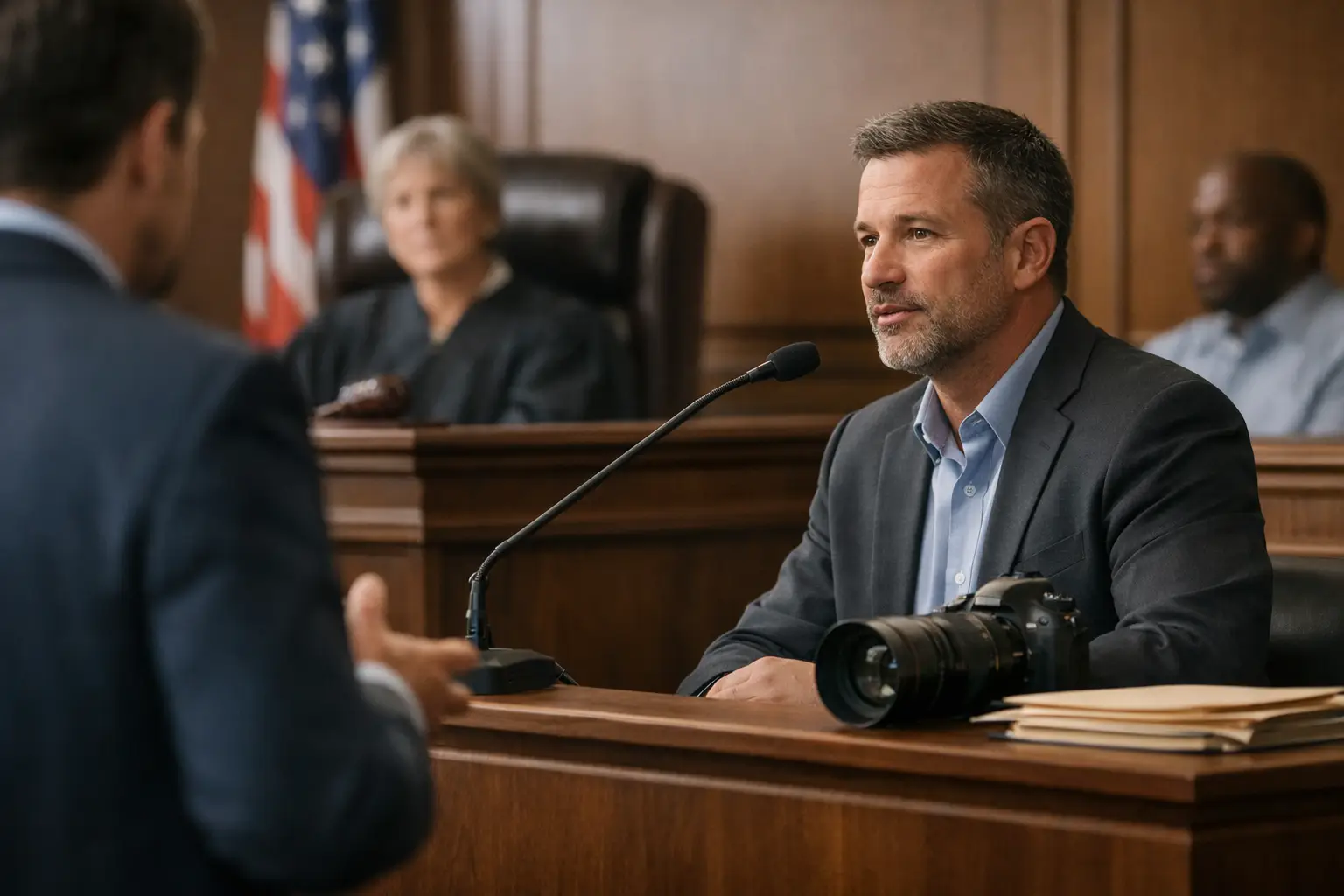
If your case may end up in court, this is not a side question. Can a private investigator testify? Yes – but the real answer is more serious than a simple yes or no. A private investigator can testify about what they personally observed, what records they legally obtained, how they handled evidence, and in some cases, their professional opinion. What they cannot do is fix a sloppy case, clean up illegal surveillance, or make weak evidence sound stronger than it is.
That distinction matters whether you are an attorney building a litigation strategy, a spouse trying to prove hidden income, or an insurer looking at a fraud claim. Courtroom value is not created at the witness stand. It is created in the field, in the records, in the chain of custody, and in whether the investigator knew from day one that the work might be challenged by a judge.
No. A private investigator can testify about relevant facts tied to the case, but there are limits. Courts generally allow testimony based on firsthand observations, documented investigative steps, authenticated records, and properly preserved evidence. If the investigator watched a subject enter a property, photographed a meeting, conducted lawful surveillance, or uncovered financial information through legal channels, that may be fair ground for testimony.
What gets people into trouble is assuming an investigator can say anything useful just because they were hired. That is not how this works. A private investigator is not a magician and not a mouthpiece. If the information was obtained illegally, if the notes are inconsistent, if video lacks context, or if the investigator starts guessing instead of sticking to facts, the testimony can be attacked fast.
In some cases, a private investigator may also testify as an expert witness, but that is a different lane. Expert testimony usually requires the court to recognize specialized knowledge, training, and experience relevant to the issue. That can happen in matters involving fraud patterns, investigative methods, missing persons work, or industry practices, but it depends on the court, the jurisdiction, and the actual qualifications of the investigator.
The better question is not just whether a private investigator can testify, but whether the testimony will hold up under pressure. Effective testimony starts with legal, disciplined investigation. That means clear reports, dated notes, preserved recordings, proper identification of subjects, and methods that do not violate privacy laws or state licensing rules.
A seasoned investigator understands that every move may later be dissected by opposing counsel. That is why experienced investigators document times, locations, conditions, and how evidence was obtained. If surveillance footage exists, the investigator should be able to explain where they were, what equipment was used, what happened before and after the clip, and why the subject was correctly identified. If financial records are involved, they should be able to explain how those records were located and why they matter.
This is where experience separates professionals from pretenders. Anybody can claim they found something. In court, the issue is whether they can defend how they found it.
Most often, a private investigator appears as a fact witness. That means they testify about what they did, what they saw, what they heard, and what they documented. This is common in surveillance cases, asset investigations, infidelity matters tied to divorce litigation, child support disputes, workers’ compensation fraud, and insurance investigations.
An expert witness role is different. In that setting, the investigator may be asked to offer opinions based on specialized expertise. For example, an investigator with decades of fraud work may be asked to explain behavioral indicators, concealment methods, or investigative standards. But courts do not hand out expert status because someone prints business cards. Credentials, experience, and relevance matter.
A former law enforcement background, long investigative history, and a track record in complex cases can carry weight, but credentials alone do not guarantee admissibility. The opinion still has to fit the legal issue in front of the court.
Plenty. The fastest way to destroy useful testimony is bad process. If the investigator trespassed, recorded communications unlawfully, misidentified the subject, relied on hearsay, or kept weak records, the damage can be severe. Even if the underlying suspicion was correct, badly gathered evidence can become useless.
There is also the issue of bias. Opposing counsel will often try to paint a private investigator as a hired gun. That is expected. The answer is not bluster. The answer is professionalism. Clean reports, consistent documentation, calm testimony, and a methodical explanation of the facts go a long way.
Another weak point is overstatement. Good investigators do not exaggerate. They do not claim certainty where there is only probability. They do not dress opinion up as fact. A witness who stays in their lane is usually more credible than one trying to win the case from the stand.
A lot of people asking can a private investigator testify are really asking about surveillance. The short answer is yes, often. If a private investigator legally conducted surveillance and personally observed conduct relevant to the case, they can usually testify about those observations.
But surveillance is not automatically powerful just because there is video. Context matters. A ten-second clip can be challenged if there is no explanation for what happened before it started or after it ended. A subject carrying a box may look healthy in one frame and still have legitimate medical restrictions. A parent seen with cash may still not be hiding income. This is why surveillance works best when it is part of a larger factual picture, not when someone expects one image to do all the heavy lifting.
In hidden asset cases, support disputes, and fraud matters, testimony often centers less on dramatic surveillance and more on records and patterns. An investigator may testify about public records searches, business connections, property holdings, vehicle ownership, court filings, social media preservation, witness interviews, and financial relationships that point to concealed income or assets.
This is where many cases are won or lost. People hide money through nominees, shell entities, informal transfers, and lifestyle contradictions. If the investigator can connect those dots with legally obtained evidence and explain the pattern clearly, the testimony can become very valuable. If the case is built on rumor, revenge, or assumptions, it falls apart.
That is one reason serious clients do not hire based on price alone. They hire based on whether the investigator understands how evidence survives scrutiny.
Lawyers who use investigators regularly know the gap between usable evidence and expensive noise. A strong investigator works with the case theory, understands timing, knows what will matter in discovery or motion practice, and avoids creating problems the attorney later has to fix.
A weak investigator chases drama, misses legal boundaries, and hands over a pile of material with no courtroom strategy behind it. That kind of work may impress a client for a day. It does not impress a judge.
For that reason, if testimony may become part of the case, the investigator should be brought in early. Waiting until the situation is already on fire usually means missed opportunities, lost evidence, and witnesses whose stories have shifted.
Yes – if the investigator is licensed where required, uses legal methods, keeps disciplined records, and knows how to present facts without gamesmanship. No – if the work was reckless, speculative, or tainted by shortcuts. That is the honest answer.
In real litigation, testimony is only as good as the investigation behind it. Courts care about credibility. Judges care about relevance. Opposing counsel cares about weaknesses. If your investigator cannot withstand all three, you have a problem.
That is why experienced firms like Vinny Parco Consulting approach every serious assignment with the assumption that the work may be examined in a courtroom, not just discussed in a conference room. There is a difference between gathering information and gathering proof.
If your case involves hidden assets, fraud, child support, infidelity, or disputed facts with legal consequences, think ahead. Do not ask only whether somebody can find information. Ask whether they can find it legally, document it correctly, and stand behind it under oath when the pressure is on.
Copyright © 2026. Vinny Parco Consulting. All rights reserved.