
Vincent Parco Consulting LLC
Private Investigations
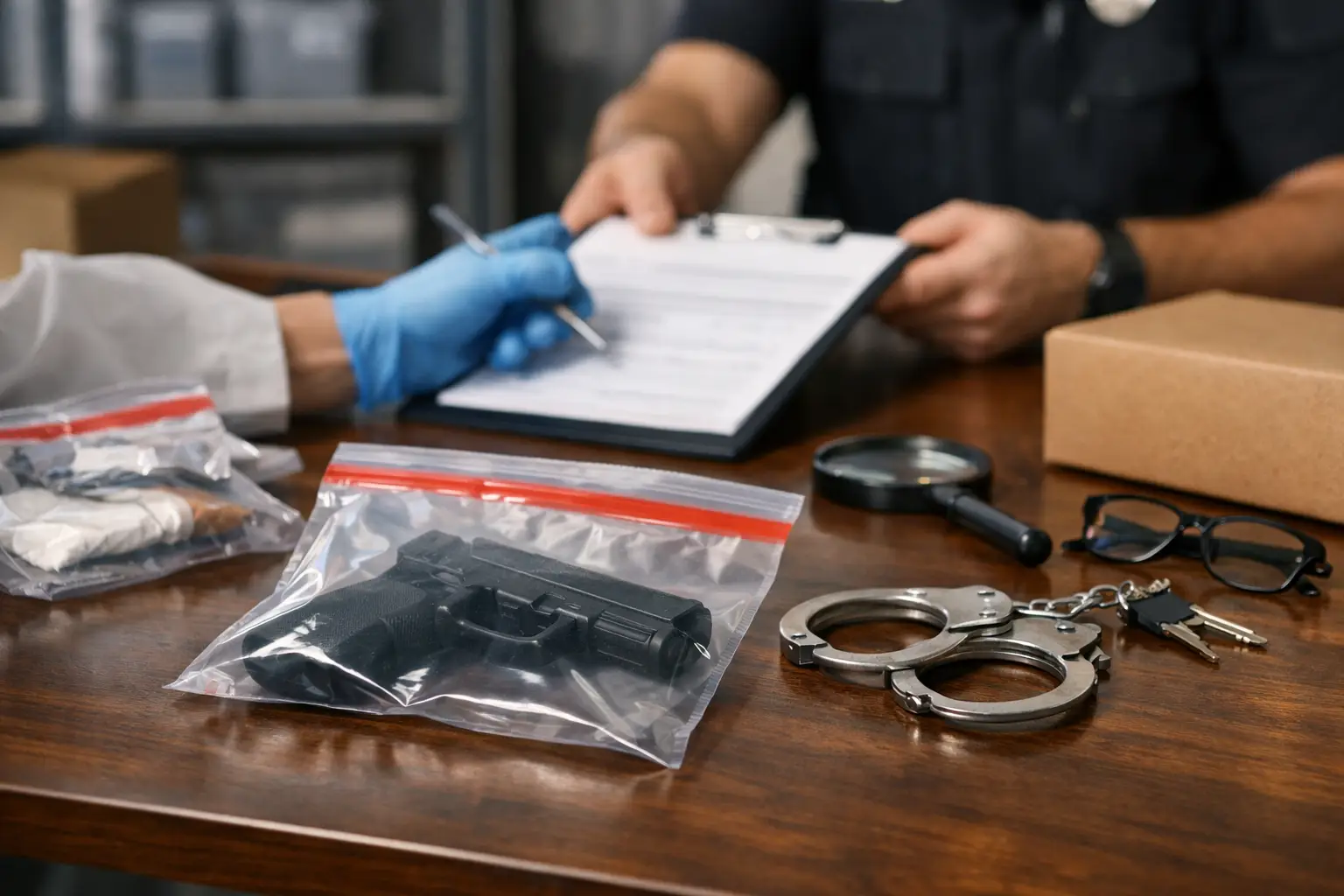
A photograph can be real. A recording can be accurate. A document can expose the truth. But if you cannot show where that evidence came from, who handled it, and whether it changed hands without interference, you may be left with a fact that cannot do its job. This chain of custody guide covers the discipline behind evidence that can withstand pressure from opposing counsel, an insurer, a judge, or anyone looking for a reason to challenge it.
For attorneys, claims professionals, business owners, and private clients, the issue is not paperwork for paperwork’s sake. It is credibility. A broken chain gives the other side an opening to argue that an item was altered, contaminated, misplaced, planted, or simply cannot be trusted.
Chain of custody is the documented history of an item of evidence from the moment it is obtained through its final use, storage, return, or disposal. The record should establish what the item is, when and where it was collected, who collected it, how it was secured, every transfer that followed, and its present condition.
Think about a disputed voicemail in a child support matter. If one party produces an audio clip with no original file, no collection notes, and no record of where the phone was kept, the clip may still raise questions. But it is vulnerable. The other side can claim it was edited or taken out of context. That can turn valuable intelligence into a courtroom fight over authenticity.
The same problem appears in insurance fraud cases, employee misconduct matters, hidden asset investigations, surveillance evidence, damaged property claims, and digital communications. Evidence does not become reliable because someone says it is. It becomes more defensible when the process is clear, consistent, and documented from the start.
There is no single chain-of-custody procedure that fits every matter. A sealed biological sample requires different handling than a downloaded email or a surveillance video. The standard, however, stays the same: preserve the item in its original condition and create a record that leaves as little room for doubt as possible.
The chain starts the second an investigator, employee, witness, or client obtains an item. Waiting until the end of the day to reconstruct what happened is how mistakes enter the record. Memories get fuzzy. Times are guessed. Locations become general instead of exact.
At collection, identify the evidence precisely. A useful description is specific enough that another person could distinguish the item from similar material. “Black iPhone” is weak. “Black Apple iPhone 14, cracked upper-right screen, recovered from the desk drawer in the west office” is far better.
Record the date, time, location, collector’s name, and circumstances of recovery. If an item was voluntarily provided by a witness, say so. If it was found during a lawful inspection, document that. If it was received from counsel, an insurer, or a client, identify the sender and the method of delivery.
Photographs taken at the point of collection can strengthen the record, particularly for physical items, damaged property, documents, and scene conditions. The photos should support the written notes, not replace them. Write down what matters while it is fresh.
Physical evidence should be placed in suitable packaging as soon as practical. The package needs an identifying case number, item number, description, collection date and time, and the collector’s initials or signature. Tamper-evident seals are useful because they make an unauthorized opening easier to detect.
The right packaging depends on the item. Wet or potentially biological material may require breathable packaging and prompt specialized handling. A fragile document needs protection from folding, moisture, and unauthorized markings. A phone, computer, or storage device may require steps to prevent remote access, alteration, or accidental use.
Do not write directly on the evidence unless the circumstances and the item clearly permit it. Do not use improvised containers that can damage the item. And do not keep evidence loose in a vehicle, desk drawer, or open office. Convenience is not a custody protocol.
Every time custody changes, create an entry. That entry should identify the person releasing the item, the person receiving it, the date and time, the reason for the transfer, and the condition of the package or evidence at the time of transfer.
This matters even when everyone involved is on the same team. A case can run for months. Personnel changes. Recollections fade. A simple transfer log prevents a later question from becoming an expensive argument.
If an item is sent to a laboratory, forensic examiner, attorney, or law enforcement agency, retain delivery records and confirm receipt. For in-person transfers, signatures are best. For shipping, use a traceable method and record tracking details in the case file. The fewer unexplained gaps, the better.
Collection gets attention because it is dramatic. Storage is where plenty of cases get sloppy. Evidence should be held in a controlled location with access limited to authorized people. That may mean a locked evidence cabinet, a secured records room, or a restricted digital evidence platform, depending on the case.
Maintain an access record where practical. If a sealed package is opened for inspection, analysis, copying, or court preparation, document who opened it, why it was opened, what was done, and how it was resealed. An intact seal means little if no one can explain why it was broken.
For high-value or highly sensitive items, consider dual verification. One person transfers the item and another confirms the item number, packaging condition, and log entry. It takes a few extra minutes. It can save a case from a needless credibility attack.
Storage conditions also matter. Heat, humidity, sunlight, magnetic exposure, and ordinary mishandling can degrade evidence. A surveillance video stored on an unreliable consumer drive is not just inconvenient. It may become unreadable at the worst possible moment.
Digital evidence creates a special problem: it can be copied perfectly, edited quickly, and altered without obvious physical signs. Text messages, social media posts, GPS data, emails, photographs, cloud files, call logs, and video footage demand careful handling.
Whenever possible, preserve the original source and create a working copy for review. Do not casually forward files, rename originals, crop screenshots, or open media in programs that may change metadata. Record the device, account, platform, file name, date and time acquired, collection method, and the person who performed the acquisition.
For significant digital evidence, a forensic image or verified extraction may be necessary. A cryptographic hash value can help demonstrate that a file has remained unchanged after collection. Whether that level of work is needed depends on the stakes, the anticipated challenge, and the type of evidence. A minor internal issue may not require a full forensic process. Litigation involving money, custody, fraud, or criminal exposure often demands more care.
Screenshots can be useful, but they are rarely the whole answer. They may not show the full conversation, account identity, creation date, or source device. Preserve the context, not just the most damaging sentence.
The worst chain-of-custody failures are usually ordinary failures: missing dates, vague descriptions, unlogged transfers, unsecured storage, and evidence handled by too many people. Another common mistake is mixing case materials. If two similar documents, devices, or samples are not clearly identified, confusion can become impossible to untangle later.
Do not fill gaps with assumptions. If the time of collection is approximate, state that it is approximate and explain why. If an item arrived without prior custody documentation, record the condition in which it was received and the limits of what can be verified. Honest limits are more credible than manufactured certainty.
Also understand the legal boundary. A strong custody log does not cure an unlawful collection, a privacy violation, or a bad search. Evidence must be gathered lawfully and handled properly. One does not excuse the other.
Before evidence is presented, review the entire custody trail as if you were trying to tear it apart. Can each person who handled the item be identified? Do the times make sense? Is the item description consistent across reports, labels, photos, and transfer forms? Can you explain every opening, copy, movement, and storage location?
This review should happen before a deposition, hearing, claim decision, or settlement conference. A late discovery that the wrong date was written on a bag or that a transfer was never logged puts everyone on the defensive.
A seasoned investigator knows that evidence is only as useful as the foundation beneath it. At Vinny Parco Consulting, difficult matters are approached with the expectation that the facts will be challenged, not merely accepted.
When the evidence could affect your finances, your family, your business, or your case, treat the chain of custody as part of the investigation itself. The truth is worth finding. It is worth protecting just as hard.
Copyright © 2026. Vinny Parco Consulting. All rights reserved.