Vincent Parco Consulting LLC
Private Investigations
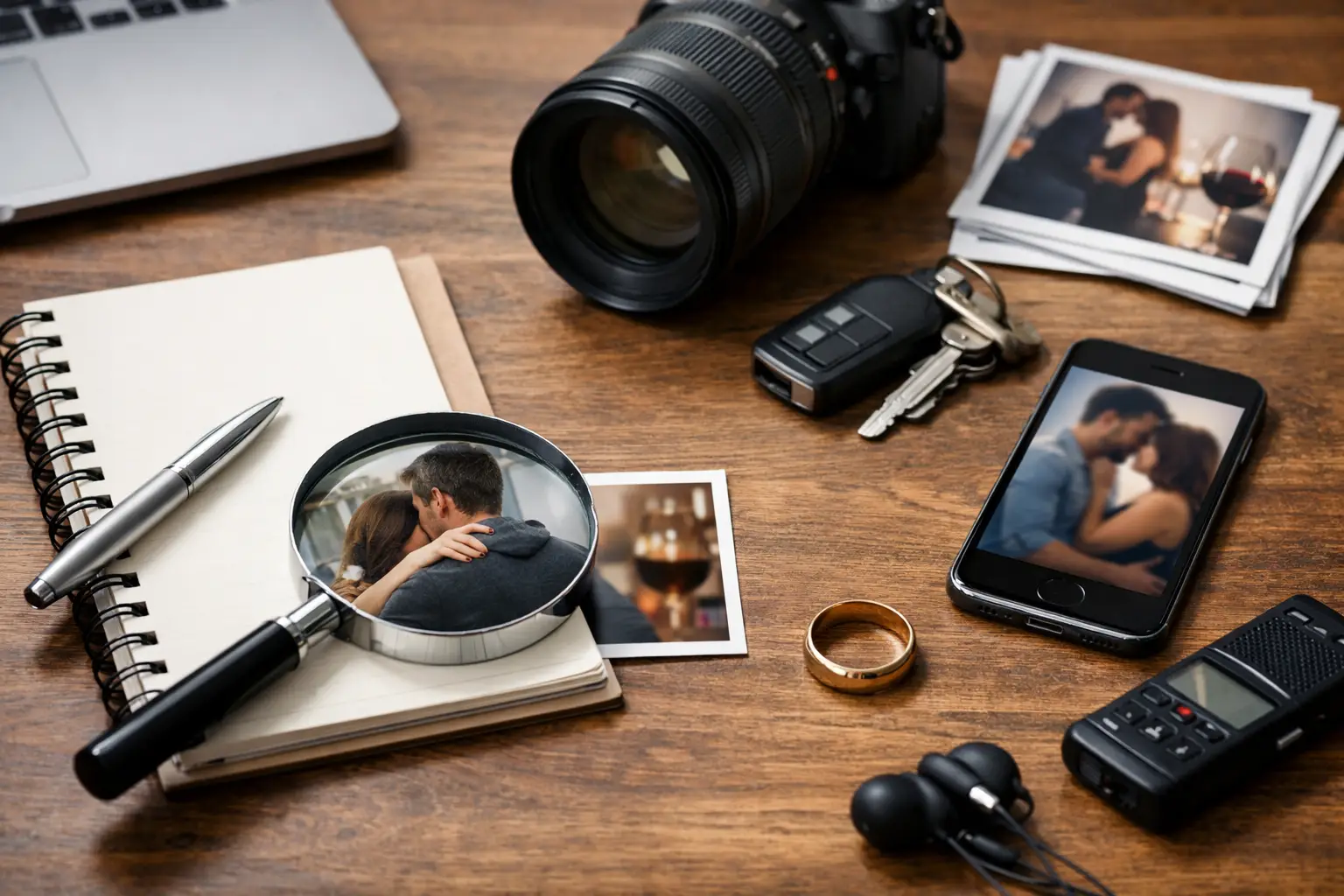
When your gut says something is off, guessing is expensive. The best ways to document infidelity are the ones that give you usable facts without putting you in legal trouble, blowing the situation up too early, or handing the other side a chance to destroy evidence.
That is the part many people get wrong. They react first, accuse fast, and start grabbing at phones, passwords, and private accounts. Bad move. If you are dealing with a marriage, divorce exposure, child custody concerns, or financial deception tied to an affair, you need proof that holds up under scrutiny. Not drama. Not theories. Proof.
Infidelity is personal, but documenting it is not just emotional. It is strategic. The strongest evidence usually shows a pattern – who, when, where, how often, and whether money or dishonesty is involved. A single suspicious text may raise questions. A timeline backed by photos, receipts, witness observations, and digital records tells a much stronger story.
You also need to separate what feels convincing from what is actually useful. In some marriages, proof of cheating matters mostly for personal clarity. In others, it can affect divorce negotiations, dissipation of marital assets claims, custody issues, or leverage in settlement talks. It depends on your state, your legal goals, and how the evidence was obtained.
That last part matters. If you gather information illegally, you can damage your own position. You can also make good evidence unusable. That is why experienced investigators and attorneys focus on lawful collection, chain of events, and clean documentation.
The best ways to document infidelity start with discipline. You are building a file, not chasing a confession.
Start writing things down as they happen. Dates, times, unexplained absences, changes in routine, overnight stays, suspicious charges, sudden password changes, unusual work excuses, and any statements that later prove false. Keep it factual and specific.
A timeline does two things. First, it stops your memory from getting polluted by stress. Second, it creates a framework that can later be matched against surveillance, financial records, hotel stays, phone activity, and travel patterns. Vague recollections do not help much. A clean log does.
If you have lawful access to communications sent to you or already visible on shared devices or accounts you are authorized to use, preserve them carefully. Take screenshots that include the date, time, and sender information. Save full message threads where possible instead of isolated lines that can be challenged as out of context.
Do not alter files. Do not crop aggressively. Do not forward things around to friends and family. That creates unnecessary exposure and can raise questions later. Save original voicemails and export emails in full form when you can. The cleaner the record, the stronger the evidence.
Affairs often leave a money trail before they leave a confession. Hotel charges, restaurant bills, rideshare records, gift purchases, second phone lines, travel, cash withdrawals, and unexplained transfers can reveal a lot. If marital funds are being used, that may matter in a divorce far beyond the affair itself.
Look for patterns, not one-off purchases. A single dinner charge may mean nothing. Recurring late-night spending in the same location, paired with false explanations, begins to establish conduct. Bank statements, credit card records, and shared financial documents often tell a more reliable story than emotional confrontations ever will.
Photos and videos can be powerful, but context is everything. A blurry image of two people in a parking lot may create suspicion. A date-stamped sequence showing repeated meetings, overnight stays, or affectionate conduct carries more weight.
If you lawfully receive location data through shared family systems, vehicle logs, or mutually authorized apps, preserve screenshots with timestamps. Do not install trackers illegally. Do not tamper with someone else’s phone, vehicle, or private accounts to create location evidence. That is where desperate people cross a line and create bigger problems than the affair itself.
Friends, neighbors, coworkers, and staff sometimes see more than they realize. But witness information is only useful if it is specific, credible, and not contaminated by gossip. If someone observed your spouse entering a hotel regularly with the same person, note the details. If someone simply says, “I heard he was cheating,” that is weak.
Do not start a public campaign for information. That creates noise, damages your credibility, and can tip off the subject. Quiet, documented witness observations are far more valuable than emotional fishing expeditions.
In many cases, surveillance is the cleanest path to the truth. That is because it captures conduct in real time and removes a lot of argument. People lie. Patterns do not.
Professional surveillance can confirm meetings, identify unknown companions, document overnight stays, and show whether someone’s stated routine matches reality. It can also help answer the question most suspicious spouses are really asking: is this inappropriate behavior, or is it provable infidelity?
There is a trade-off. Surveillance requires timing, planning, and money. If your spouse is highly cautious, changes routines often, or already suspects scrutiny, the job gets harder. But when done properly, it produces objective evidence instead of assumptions.
This is where experience matters. A seasoned investigator knows how to document activity discreetly, legally, and in a form that is actually useful. Vinny Parco Consulting handles these matters with the kind of discipline that comes from decades in the field, because emotional cases still demand hard evidence and professional control.
Some mistakes are so common they are practically predictable. People guess passwords, break into devices, record conversations illegally, hide GPS trackers, impersonate someone online, or confront the suspected partner before the evidence is preserved. That is reckless.
You should also avoid manufacturing evidence. Do not bait someone into incriminating messages just so you can screenshot them later. Do not edit records to make your case look stronger. If your matter reaches a courtroom, mediation table, or attorney review, manipulated material can destroy your credibility fast.
Another mistake is assuming infidelity proof and legal proof are the same thing. They are not always. A photo may satisfy you personally but have limited value in court. A spending record may matter more than a romantic message if the real dispute is over hidden use of marital assets. It depends on your objective.
Good evidence loses value when it is sloppy. Keep everything in one secure place. Organize by date. Save screenshots, statements, photographs, videos, and notes with clear file names. If there are multiple incidents, create a timeline that connects the pieces.
Context matters. A hotel receipt by itself may be ambiguous. A hotel receipt tied to a text exchange, a location ping, and surveillance images from the same night becomes much harder to explain away. This is how strong cases are built – not with one dramatic reveal, but with several pieces that support each other.
If attorneys are involved, ask what format they prefer. If litigation is possible, preserve originals whenever you can. Keep backup copies. Do not rely on your phone alone.
If there are children in the picture, your focus should widen beyond cheating. You are looking at judgment, stability, exposure to inappropriate situations, and whether the affair overlaps with neglect, deception, or misuse of household money. The affair itself may not drive the legal outcome. The surrounding behavior might.
The same applies when finances are at stake. If a spouse is spending marital funds on another relationship, concealing travel, or shifting money to support a double life, the documentation needs to show more than romance. It needs to show economic impact. That is often where investigators and forensic professionals become especially useful.
The strongest cases are rarely built by doing more. They are built by doing the right things in the right order. Stay calm. Stay legal. Document facts, not feelings. And if the stakes are high, get help from someone who knows how to turn suspicion into evidence you can actually use.
When trust breaks, speed matters – but discipline matters more.
Copyright © 2026. Vinny Parco Consulting. All rights reserved.